If you’re only testing your labs once a year, you’re not optimizing - you’re guessing.
That once-a-year checkup might be enough to catch disease, but it’s useless if your goal is to improve how you look, feel, and perform. Health is dynamic. Hormones fluctuate. Habits shift. Protocols need to be dialed in.
That’s why at Catalyst, we retest every 90 days. Here's why it matters, and what it lets us do that no other model can.
Health Is a Moving Target
Your body is not a fixed machine. It’s a constantly adapting system.
Every quarter, you’re affected by:
Seasons: Less sunlight in winter impacts Vitamin D, mood, and testosterone
Training cycles: Shifting your workout focus changes nutrient and hormone demands
Stress & sleep: Cortisol and inflammation markers respond fast to life circumstances
Protocol changes: New supplements, medications, or interventions all need re-evaluation
Waiting a full year to check in means you’re flying blind for 9+ months, while your biology moves on without you.
Your Hormones Don’t Stay Static
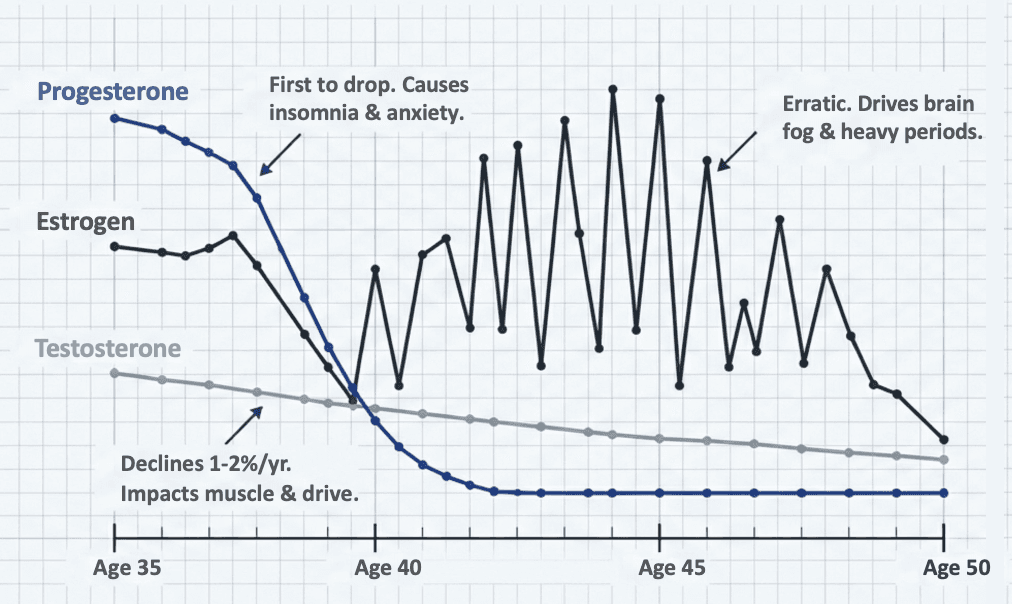
Even with stable therapy or great lifestyle habits, hormone levels fluctuate.
Testosterone can drift based on stress, sleep, travel, or even dietary shifts
Estradiol can spike if testosterone converts too quickly (affecting mood and libido)
SHBG and DHT can shift your free testosterone, even if total looks the same
Cortisol rhythms can become dysregulated due to overtraining or burnout
Quarterly testing catches these trends early, before symptoms creep back in - and lets us fine-tune your protocol, not just “wait and see.”
Biomarker Feedback Drives Accountability
There’s a psychological shift that happens when you know you’re retesting soon.
You stay more engaged in your habits
You treat nutrition, training, and recovery more seriously
You get rewarded with visible data that validates your efforts, or flags where you’re slipping
In other words, it keeps health from becoming an abstract idea and grounds it in real, trackable progress.
Optimization Requires Iteration
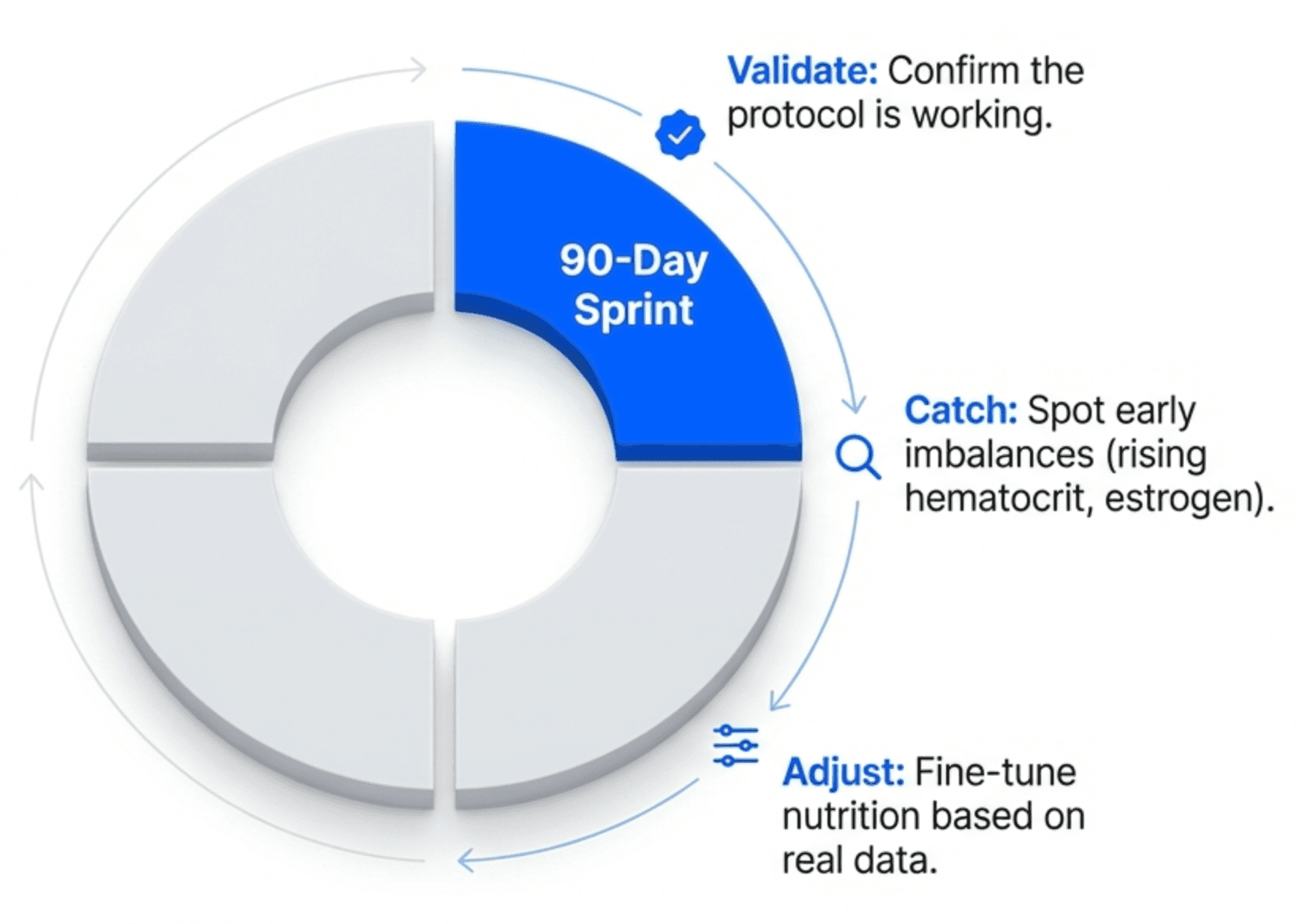
No protocol is perfect out of the gate. The first 90 days are just the starting point.
Quarterly retesting lets us:
Validate what’s working and double down
Spot early signs of imbalance before symptoms return
Adjust dosages, timing, or formulations based on how your body responds
Catch unintended consequences (e.g., elevated hematocrit on TRT, estrogen swings, nutrient depletion)
Track performance metrics tied to your goals: strength, libido, sleep, focus, body comp
This is what turns “treatment” into tuning.
What We Track Every 90 Days
Each retest is targeted to your protocol and priorities, but typically includes:
Hormone panel: Total/Free T, Estradiol, SHBG, DHEA-S, LH/FSH
Metabolic markers: Insulin, glucose, A1c, lipid panel
Inflammation & recovery: hs-CRP, ESR
Nutrient status: B12, folate, Vitamin D
Specialty markers as needed (hematocrit, thyroid, cortisol, IGF-1, etc.)
We don't just hand you results - we translate them into action.
The Bottom Line
Retesting every 90 days isn't excessive, it’s essential. Retesting helps to:
Catch problems early
Track progress over time
Keep your protocol on-target
Put you in a feedback loop that compounds results
At Catalyst, we don’t “set it and forget it.”
We measure, iterate, and improve - every 90 days.
Because the goal isn’t just normal. The goal is better.