You don’t wake up one day and suddenly feel “old.” What actually happens is a series of subtle but powerful shifts in hormones - especially estrogen, progesterone, and testosterone - that start in your 30s and accelerate in your 40s.
At Catalyst, this is one of the most common inflection points we help patients navigate. Hormones after 40 don’t just affect fertility, they influence body composition, energy, sleep, mood, recovery, skin, libido, and cognitive performance.
Here’s what actually changes, and how to tell if you’re being impacted.
Estrogen: The Rollercoaster
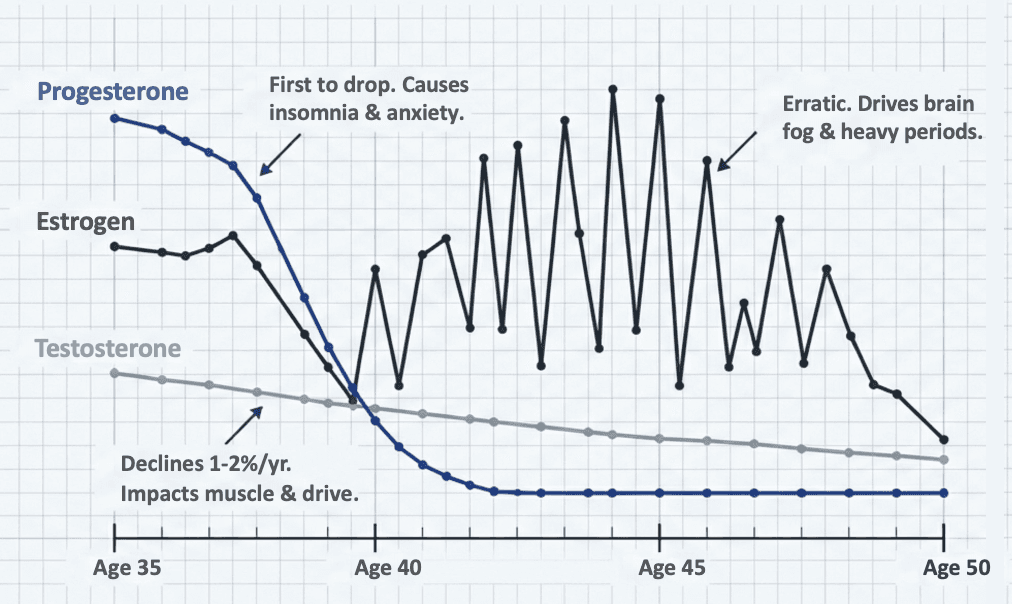
In perimenopause, estrogen becomes erratic: spiking one month, dropping the next. That volatility can drive:
Heavy or irregular periods
Breast tenderness, bloating, and migraines
Sleep disruption and mood swings
Increased fat storage in hips and thighs
By the time you reach menopause (typically between 45–55), estrogen levels do decline significantly, especially estradiol, the most active form. That’s when you may notice:
Vaginal dryness or pain with sex
Loss of skin elasticity and joint discomfort
Metabolic slowdown and increased visceral fat
Hot flashes and night sweats
We track estradiol and estrone levels through blood testing, and more importantly, look at ratios with progesterone to understand your symptoms and risks.
Progesterone: The First to Drop
Progesterone is the calming, balancing hormone that helps regulate your cycle, promotes sleep, and tempers estrogen’s effects. But after 35-40, ovulation becomes less consistent, and without ovulation, you don’t make enough progesterone.
Signs of low progesterone include:
Shorter cycles or mid-cycle spotting
Insomnia, anxiety, and restlessness
PMS, irritability, or mood volatility
Lighter or heavier periods
Many of the symptoms blamed on “estrogen dominance” are actually the result of low progesterone relative to estrogen. At Catalyst, we look at this balance, not just the absolute numbers.
Low progesterone is also a major driver of early perimenopause symptoms, even if estrogen is still within range.
Testosterone: Quiet Decline, Big Impact
Testosterone isn’t just a male hormone. In women, it supports:
Lean muscle mass and bone density
Libido and sexual function
Mood, motivation, and mental sharpness
Metabolism and insulin sensitivity
Levels typically decline 1–2% per year after 30, but for some women, this accelerates after 40 due to stress, poor sleep, overtraining, or nutrient deficiencies.
Signs of low testosterone in women:
Loss of strength or muscle tone
Decreased libido and arousal
Brain fog or loss of drive
Difficulty recovering from workouts
Increased belly fat
We test free testosterone and DHEA in addition to total testosterone to get a more accurate read.
How We Assess and Optimize at Catalyst
Our Core Membership includes quarterly lab panels that map your hormone patterns over time, not just one random snapshot. We also look beyond hormones to assess:
Cortisol rhythm and adrenal resilience
Thyroid health (TSH, free T3/T4, antibodies)
Insulin, glucose, and metabolic health
CRP and inflammation markers
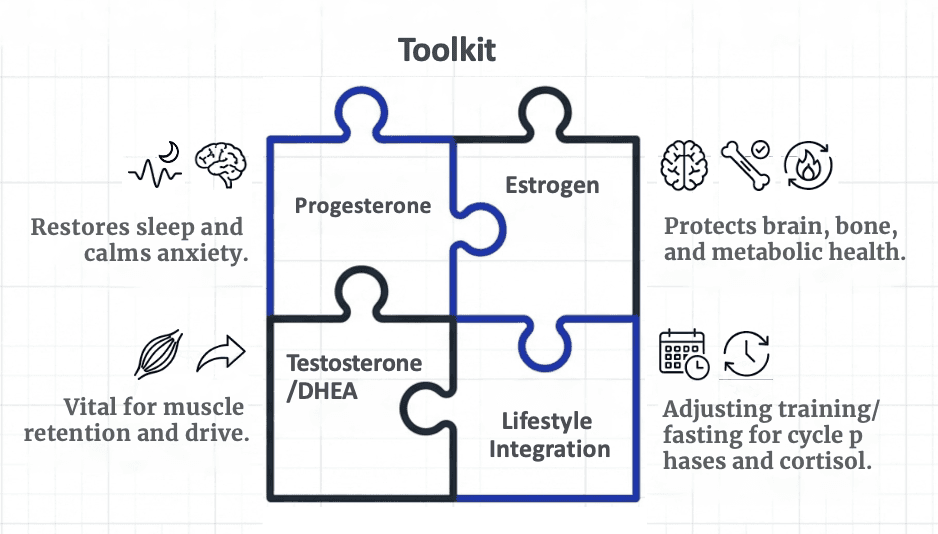
From there, we create a personalized optimization protocol, which may include:
Bioidentical hormone therapy (progesterone, low-dose estradiol, DHEA, or testosterone)
Sleep, stress, and training adjustments
Targeted supplements (DIM, magnesium, adaptogens, omega-3s)
Optional peptides or GLP-1s, if appropriate
Our approach prioritizes preserving muscle, metabolism, cognition, and quality of life — not just “managing symptoms.”
Curious Where Your Hormones Stand?
You don’t need to wait for things to get bad. We work with high-functioning people who want clarity and control over how their body is changing, and a plan to stay ahead of it.