Most women enter perimenopause with more questions than answers. Their periods are changing. Sleep feels unpredictable. Weight is creeping up despite effort. And mood swings hit like weather patterns.
What they often get in return is generic advice: try birth control, take some magnesium, maybe get on an antidepressant, and wait for it to “pass.”
At Catalyst, we believe this is a mistake.
Perimenopause is not a problem to fix with a patchwork of bandaids. It’s a biological shift that deserves strategy, precision, and personalization.
Why Perimenopause Feels So Unpredictable
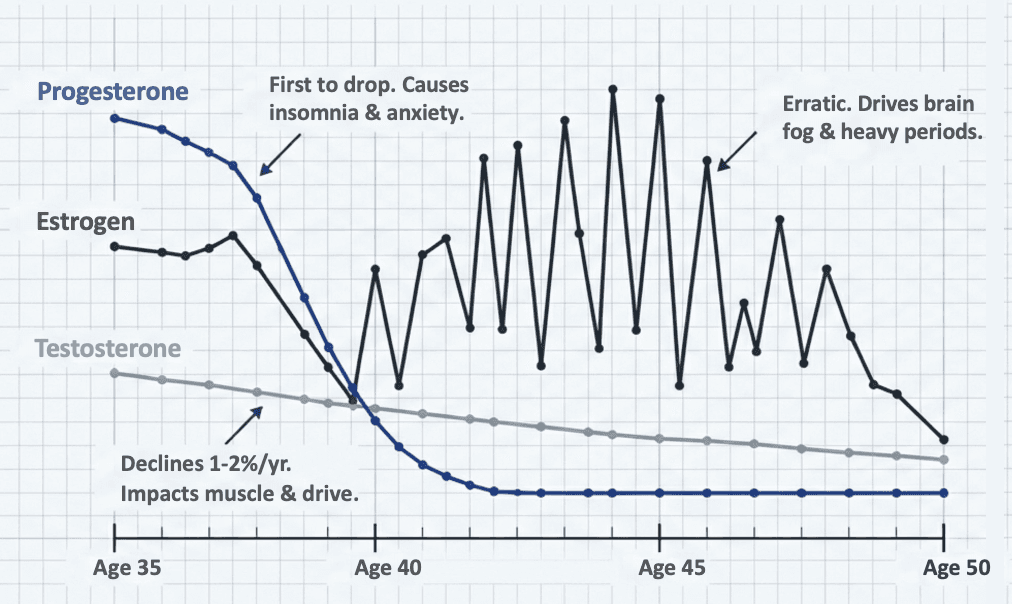
Perimenopause can start as early as your mid-30s, and last up to a decade. The hallmark isn’t low hormones, it’s unstable hormones. Estrogen surges. Progesterone drops off. Cortisol creeps up. Testosterone declines.
This hormonal volatility can cause:
Irregular or heavy periods
Anxiety, mood swings, or rage
Insomnia and early morning waking
Brain fog and forgetfulness
Bloating, breast tenderness
Weight gain, especially around the belly
Fatigue despite "normal" labs
Traditional medicine often dismisses these symptoms or chalks them up to stress. We don’t. We track patterns over time, not just a single lab result.
What We Test and Why
Our diagnostic panels go beyond “basic labs.” We track key biomarkers related to perimenopause, including:
Estradiol and Estrone: Understand estrogen swings and metabolite balance
Progesterone: Assess ovulatory function and sleep quality impact
Free Testosterone + DHEA: Gauge muscle, libido, and recovery hormones
Thyroid Panel (TSH, Free T3/T4, Antibodies): Rule out misdiagnosed thyroid issues
Cortisol Rhythm (AM, PM): Look for adrenal patterns driving fatigue
Inflammation and Glucose Markers: Understand metabolic shifts
This gives us a clear window into what’s driving your symptoms, not just a label.
Our Protocols Are Built Around You
Perimenopause shouldn’t be something you suffer through. At Catalyst, we personalize your protocol around what your labs and symptoms actually show:
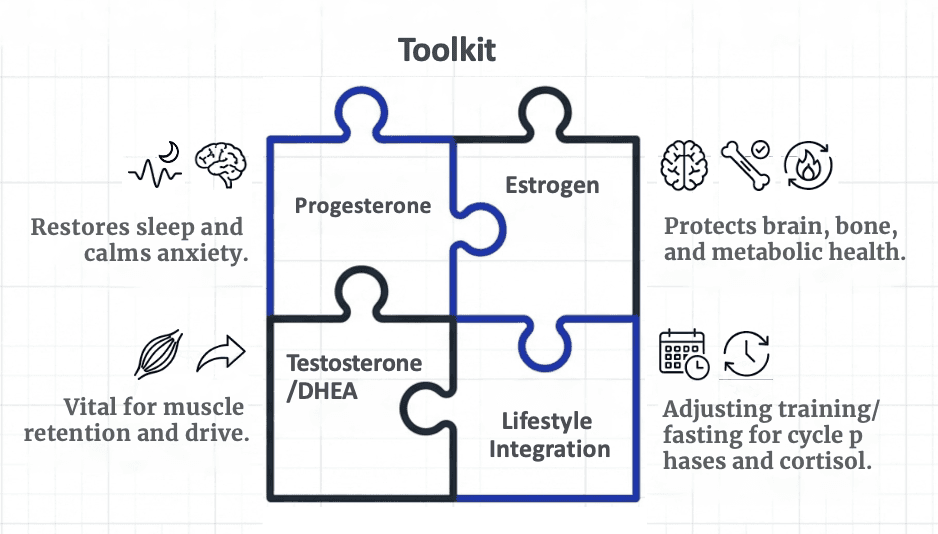
Bioidentical progesterone (oral or topical) to improve sleep, reduce anxiety, and balance estrogen
Targeted estrogen support if needed — not all patients need HRT, but we offer it when it’s right
Adaptogens and sleep supports for cortisol resilience
Testosterone or DHEA microdosing to support muscle, mood, and libido
Peptides, GLP-1s, and advanced interventions if appropriate
Nutrition, recovery, and training adjustments to support your biology
We focus on protecting long-term performance: preserving muscle, metabolism, and brain health through the transition.
Why This Matters Now
Most women don’t get help until they’re desperate. They’ve tried all the supplements. They’ve gone to multiple providers. And they’re told: “Your labs are fine.”
But being in-range doesn’t mean you’re optimal. And perimenopause isn’t just about your period. It’s about your resilience, cognition, and quality of life as you age.
The Bottom Line
Perimenopause is not a phase to be ignored. It’s the biological front door to the next stage of your life, and how you support your body now affects how you’ll feel for decades.
The Catalyst difference?
We don’t offer bandaids. We offer strategies.
We don’t treat averages. We treat you.