Most men start to experience a subtle decline in testosterone as early as their late 20s, and it often goes unnoticed until symptoms like low energy, reduced muscle mass, or diminished libido creep in. But not every guy needs hormone therapy. Often, the right combination of lifestyle changes can support healthy testosterone production without a prescription.
Here’s what actually works, based on clinical evidence and our experience treating high-performing men.
1. Sleep: Your Most Powerful Hormonal Reset
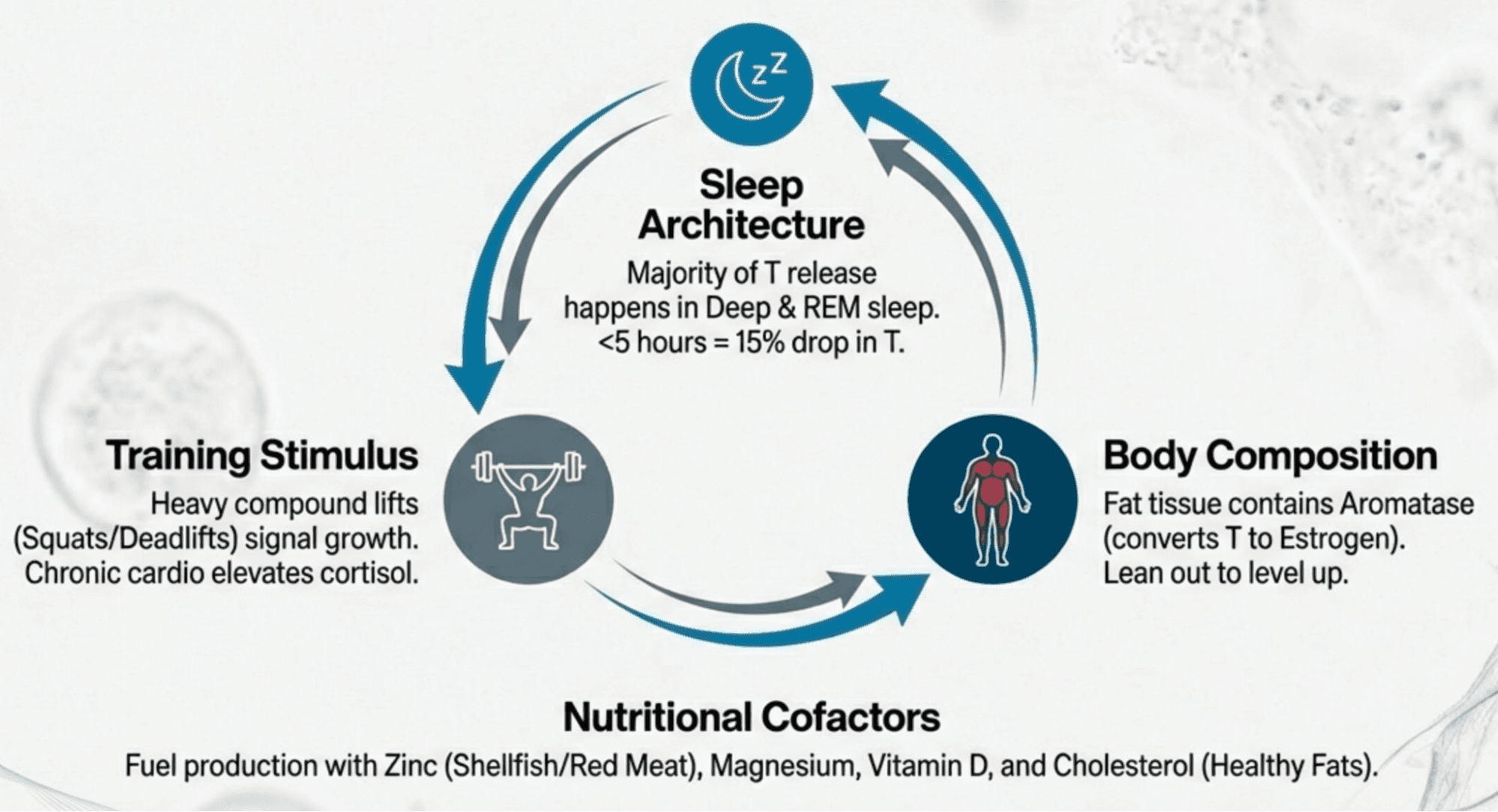
The majority of daily testosterone release happens during sleep — especially deep and REM sleep. If you're only getting 5–6 hours a night, or your sleep architecture is suboptimal, you're likely leaving testosterone gains on the table.
Deep sleep (slow-wave sleep) is when the body produces the most luteinizing hormone (LH), which signals your testes to make testosterone.
REM sleep supports hormonal balance and stress resilience, both of which help maintain testosterone levels.
One study found that men who slept 5 hours per night for just one week had testosterone levels 10–15% lower than when they got a full night’s sleep.
Aim for: 7.5–9 hours of high-quality sleep with enough time in deep and REM stages. Sleep tracking tools like Oura Ring or WHOOP can help monitor this.
2. Strength Training: The Right Dose of Stress
Lifting weights — especially compound movements like squats, deadlifts, and presses — is one of the most effective ways to boost testosterone naturally.
Short, intense resistance training increases acute testosterone levels
Long-term training improves baseline hormone balance and body composition (lower fat, more muscle)
Avoid: Chronic overtraining or excessive cardio, which can elevate cortisol and suppress testosterone.
Aim for: 3–4 days of moderate-to-heavy resistance training per week. Focus on progressive overload, and prioritize recovery.
3. Body Composition: Fat is a Hormonal Organ
High body fat - especially visceral fat around your midsection - is directly linked to lower testosterone.
Fat tissue contains aromatase, an enzyme that converts testosterone into estrogen
Increased inflammation and insulin resistance also reduce LH and testosterone production
Even modest fat loss (5–10% of body weight) can have a meaningful impact on testosterone.
Aim for: A lean, muscular body composition with a waist circumference under 40 inches for most men.
4. Nutrition: Feed Your Hormones
Certain nutrients are critical for hormone production — and low levels can tank testosterone.
Key nutrients to focus on:
Zinc: Supports LH production and testosterone synthesis (found in red meat, shellfish, pumpkin seeds)
Magnesium: Helps regulate free testosterone and sleep quality (leafy greens, nuts, dark chocolate)
Vitamin D: Functions like a hormone; low levels are linked to lower testosterone (sun exposure + supplementation)
Avoid: Processed seed oils, excessive alcohol, and high-sugar diets.
5. Manage Stress (and Cortisol)
High stress increases cortisol, which competes with testosterone for production and can blunt its effects.
Simple tactics that actually work:
Daily sunlight exposure
Breathwork or short meditation sessions
Strength training + rest balance
Limiting screen time and blue light at night to improve sleep quality
6. Sex and Desire: It Goes Both Ways
Testosterone drives libido, but arousal and sexual activity can also raise testosterone levels.
One study found that sexual arousal alone significantly increased testosterone levels in men
Regular sexual activity may help maintain higher baseline T levels over time
If your libido is low, it could be a cause or a symptom. Either way, it’s a signal worth investigating.
Should You Go Further?
If you’ve already optimized sleep, training, nutrition, and stress, but symptoms of low testosterone persist - it may be time to dig deeper.
At Catalyst Precision Health, we run a comprehensive hormone panel that includes:
Total and free testosterone
SHBG, estradiol, LH, DHEA-S, and more
We also build personalized protocols that may include supplemental support, Enclomiphene, or testosterone replacement therapy — but only when clinically indicated.
Final Thoughts
You can’t hack your way to better hormones with just supplements or TikTok trends. But you can make a measurable impact with real lifestyle optimization. And if that’s not enough, advanced diagnostics and personalized protocols can take you the rest of the way.