Hormones shape everything from how you feel when you wake up to how well you perform at the gym and in the bedroom. But hormone imbalances don’t always show up with flashing warning signs - they often creep in gradually - and if you're like most men, you chalk the changes up to age, stress, or “just life.”
Here’s how to recognize the signs that your hormones may be out of balance, and what to do about it.
1. You’re Tired All the Time, No Matter How Much You Sleep
Fatigue is one of the most common, and most overlooked, symptoms of low testosterone or other hormonal imbalances.
If you're sleeping 7–9 hours and still feel drained, it’s not just your schedule.
Low testosterone reduces mitochondrial function and red blood cell production, which directly impacts your energy output.
Other hormones like thyroid (T3, T4) and cortisol can also play a role in persistent fatigue.
Don’t dismiss exhaustion as a normal part of getting older. It’s a diagnostic clue.
2. Your Body Composition Is Shifting, and Not in a Good Way
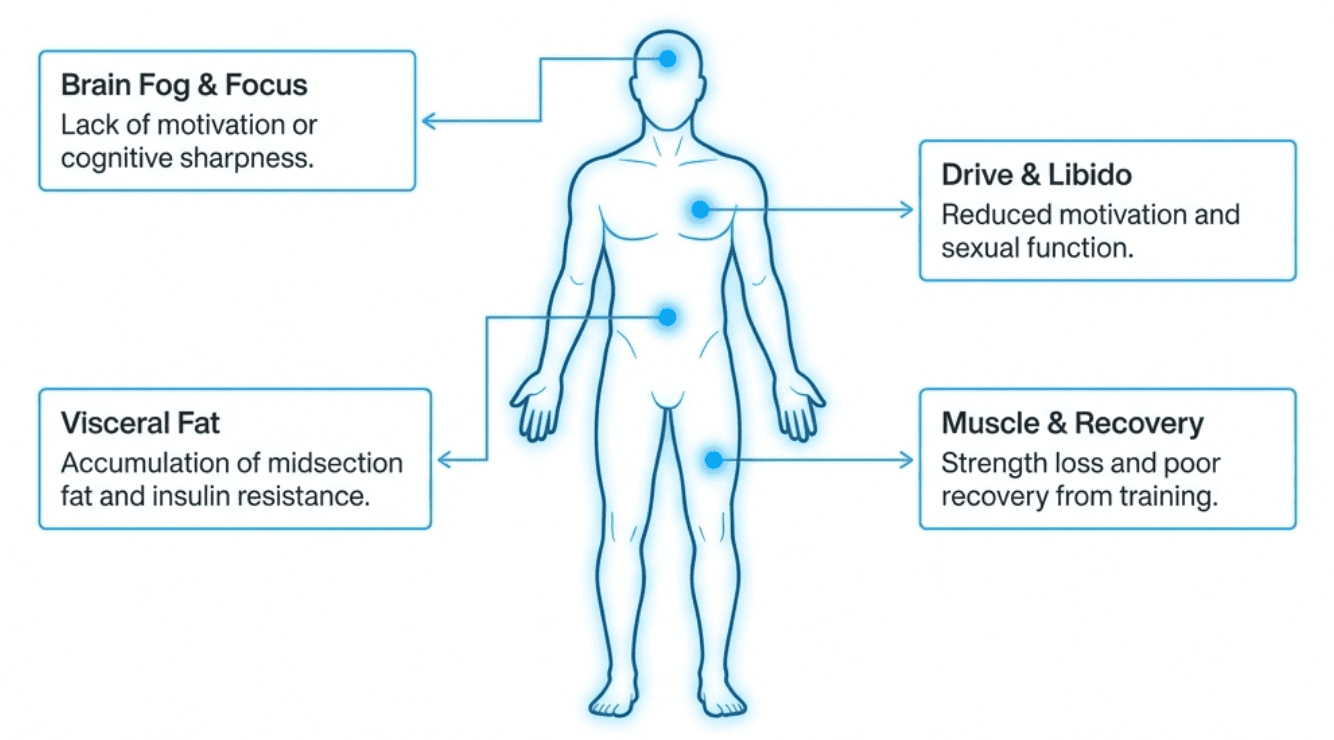
If you're losing muscle mass, gaining fat (especially around the waist), or having a harder time recovering from workouts, hormones could be the reason.
Testosterone plays a direct role in muscle protein synthesis
Low T makes it harder to build or maintain lean mass, and easier to accumulate fat
Elevated estrogen and insulin resistance often show up alongside low testosterone
Even with consistent diet and training, hormone imbalances can stall your progress.
3. You’re Experiencing a Drop in Libido or Erectile Function
Sex drive and performance are hormonally driven, and testosterone is a major player.
Declining interest in sex or weaker erections can signal low T
Early morning erections are one of the most sensitive indicators of hormonal health
Low DHEA, high prolactin, or cortisol issues can also contribute
It’s not just about sex - these changes reflect deeper biological shifts.
4. Your Mood, Motivation, or Resilience Has Changed
Hormones regulate more than just your body - they shape your mindset and overall mood.
Low testosterone is linked to increased anxiety, irritability, and depressive symptoms
You may feel more passive, withdrawn, or less driven
Hormonal shifts affect dopamine and serotonin signaling
If you feel like you’ve lost your edge, it might not be “burnout.” It might be biochemical.
5. You’ve Got Brain Fog or Slower Cognition
Trouble concentrating, forgetfulness, or slower mental processing are often tied to hormonal shifts.
Testosterone receptors are found throughout the brain, including areas tied to memory and focus
Low T has been associated with reduced spatial awareness, slower processing speed, and mental fatigue
Thyroid dysfunction can mimic ADHD-like symptoms in adults
6. You Have Signs of Insulin Resistance or Metabolic Slowdown
Hormones are deeply intertwined with metabolism.
Low testosterone increases the risk of insulin resistance and type 2 diabetes
If your fasting glucose, HbA1c, or waistline are creeping up, hormones may be part of the picture
You may also notice sugar cravings, post-meal crashes, or poor appetite control
7. Your Labs Are “Normal,” But You Still Don’t Feel Right
This might be the most important sign of all.
Most standard labs only check total testosterone, and even that uses a wide reference range that’s not specific to your biology. What’s “normal” on paper often isn’t optimal for performance, energy, or longevity.
At Catalyst Precision Health, we test a full hormone panel including:
Total and Free Testosterone
SHBG
LH & FSH
Estradiol
DHEA-S
Cortisol
Thyroid panel (TSH, Free T3, Free T4)
We don’t just look at numbers - we map them to your symptoms, your goals, and your biology.
What to Do If You Recognize These Signs
Get tested - properly. Don’t rely on labs with limited markers. You need the full picture to act.
Work with a team that understands optimization. Not every provider knows how to interpret or act on suboptimal hormone patterns.
Build a personalized protocol. Sometimes lifestyle is enough - sleep, strength training, body comp. Other times, the right supplements or compounds like Enclomiphene or TRT (when appropriate) can make a profound difference.
Our Approach at Catalyst
We use advanced labs to pinpoint what’s actually going on, then build a customized plan that might include:
Nutrition and training adjustments
Precision supplementation
Sleep and stress recalibration
Non-TRT hormone support like Clomid or DHEA
TRT: only if needed, and only with tight monitoring