Perimenopause can feel like a moving target. One month you’re sleeping fine, the next you’re wide awake at 3am. One week your workouts feel strong, and the next you’re bloated, tired, and wondering if it’s all in your head.
These shifts are real, and they often point to changing hormone patterns that deserve attention, not dismissal.
What Is Perimenopause?
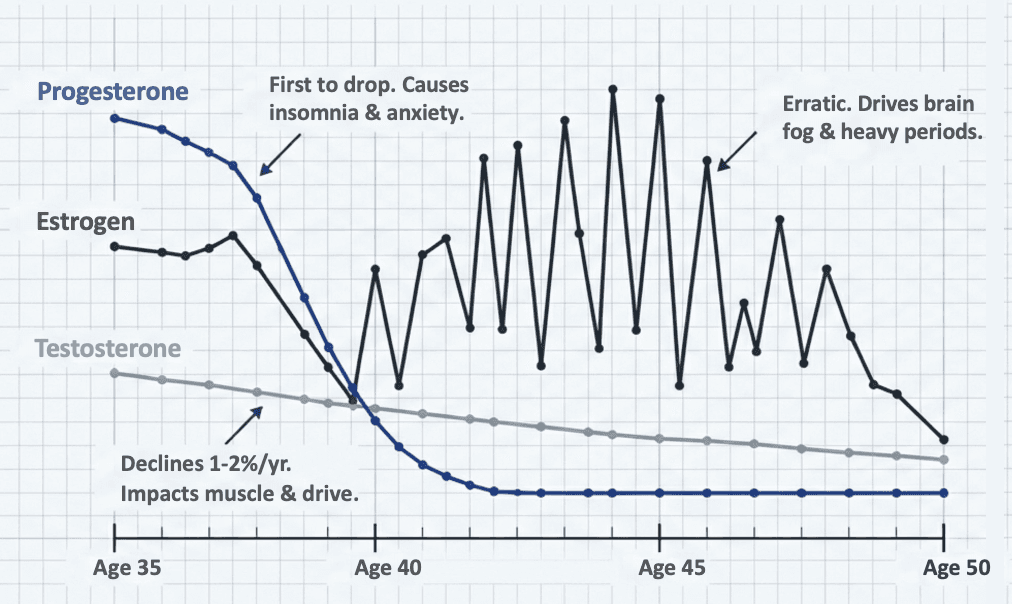
Perimenopause is the transitional phase before menopause, often starting in your late 30s or early 40s and lasting anywhere from 4 to 10 years. It’s marked by fluctuations in estrogen, progesterone, testosterone, and even cortisol and thyroid hormones, all of which affect your energy, metabolism, mood, and recovery.
At Catalyst, we don’t wait until menopause to intervene. Hormone optimization during perimenopause can preserve performance, body composition, and mental clarity, and prevent unnecessary suffering.
Key Signs You May Need Hormone Optimization
1. Sleep Disruptions
Trouble falling or staying asleep
Waking up at 2–4am with a racing mind
Hot flashes or night sweats
Often driven by progesterone decline and cortisol dysregulation. We also look at estrogen balance and nervous system tone.
2. Fatigue and Brain Fog
Energy dips despite enough sleep
Mental “slowness,” word recall issues, or lack of motivation
This can stem from low testosterone, low thyroid, or chronic estrogen dominance relative to progesterone. We also check nutrient cofactors and inflammation markers.
3. Weight Gain or Body Composition Changes
Belly fat that didn’t used to be there
Loss of muscle tone despite exercise
Increased carb cravings
Often tied to lower estrogen and testosterone, insulin resistance, or poor mitochondrial function. We assess fasting insulin, glucose, leptin, and body fat distribution alongside hormones.
4. Mood Swings and Anxiety
Increased irritability, anxiety, or low mood
Feeling emotionally “fragile” or more reactive
Hormonal volatility can impact GABA, serotonin, and stress resilience. We examine cortisol rhythm, progesterone levels, and nervous system balance to guide intervention.
5. Irregular or Heavy Periods
Skipped cycles or shorter intervals
Heavier bleeding, clotting, or longer periods
This often reflects anovulatory cycles, where you don’t produce enough progesterone to balance rising estrogen. Left untreated, it can increase risk of fibroids, endometriosis, and anemia.
6. Libido Changes and Vaginal Dryness
Lower interest in sex
Discomfort or pain during intimacy
A drop in testosterone and estrogen can affect not just libido but pelvic tissue health and overall vitality. These are often easy to improve with the right protocols.
What We Look At — Beyond the Basics
Most doctors will offer a basic hormone panel. At Catalyst, we take a deeper approach:
Comprehensive hormone testing (estradiol, progesterone, testosterone, DHEA, LH/FSH)
Thyroid markers (TSH, free T3/T4, reverse T3, antibodies)
Adrenal health (4-point cortisol salivary testing)
Metabolic markers (fasting insulin, glucose, HbA1c)
Inflammation and nutrient status (hs-CRP, ESR, vitamin D, B12)
These labs help us build a personalized hormone optimization protocol, not just symptom management.
What Hormone Optimization Can Look Like
Your plan might include:
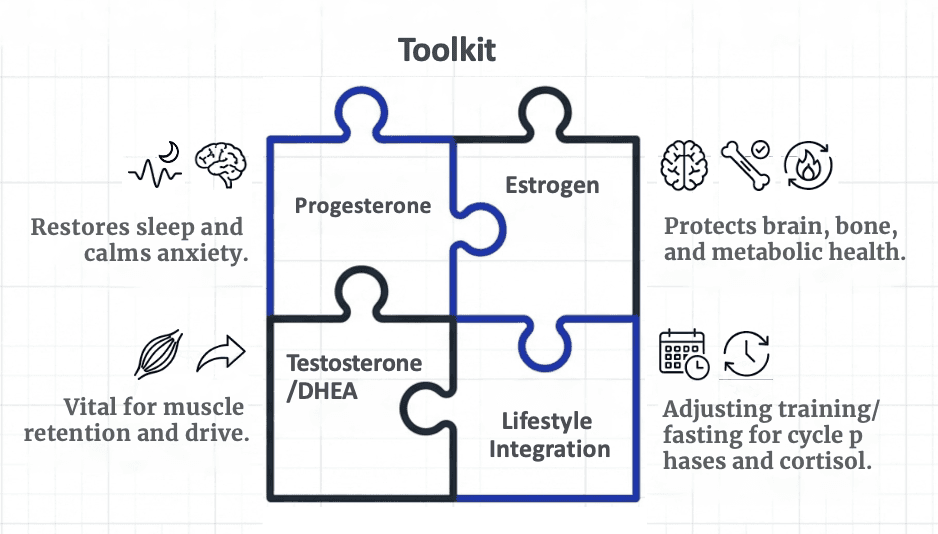
Bioidentical hormone therapy (progesterone, low-dose estradiol, DHEA, or testosterone)
Cycle support protocols (to preserve ovulation and natural balance)
Targeted supplements (adaptogens, magnesium, DIM, omega-3s)
Sleep, training, and stress adjustments
Optional peptide therapy or thyroid support depending on labs
The goal is not to “override” your biology, but to support your body through transition, and keep you performing at your best.
Want to Find Out If You’re a Candidate?
We start with a quarterly lab panel that goes far deeper than most primary care visits. You can either: