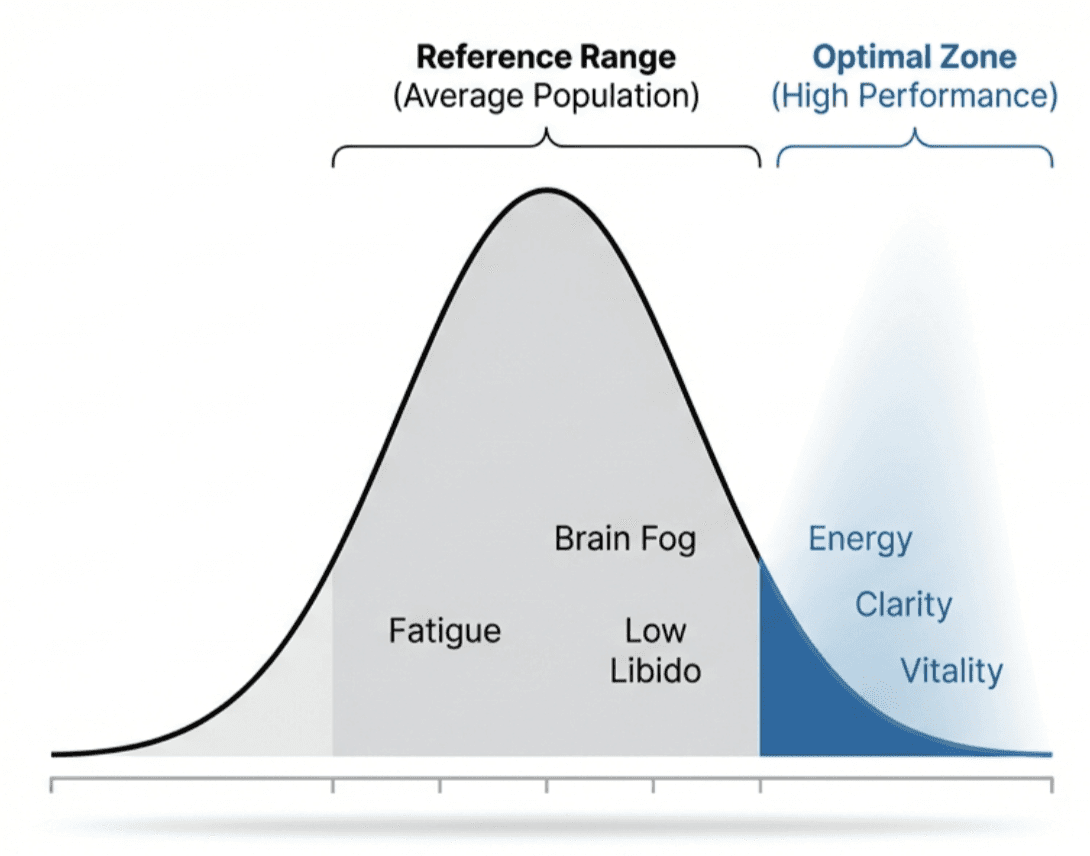
Most men are told their testosterone is “normal.” But that doesn’t mean it’s optimal, or that you feel your best.
If you've ever had your testosterone checked and heard, “You're in the normal range,” you’re not alone. It's one of the most common dead ends in modern men's health.
Here’s what most doctors don’t tell you:
The “normal” range includes a wide range of age, which may not be as tightly applicable to you
It includes men with symptoms like low energy, poor libido, and declining muscle mass
And it includes a wide variance in lab accuracy, timing, and reference ranges
At Catalyst Precision Health, we look beyond what’s “normal” - because feeling flat, tired, or off shouldn't be dismissed just because your number is technically in range.
What Is “Normal” Testosterone, Anyway?
Total testosterone levels are usually considered “normal” between approximately 300–900 ng/dL.
That’s a huge range.
And it doesn’t account for:
Age (younger men should be closer to the top)
Free testosterone (the bioavailable portion - often ignored)
Symptoms (which can show up even at mid-range levels)
Lab ranges aren’t health targets, they’re population averages. That means they include a lot of men who aren’t thriving. It also means you could be at 350 ng/dL and told you’re fine, even if your symptoms suggest otherwise.
Why Free Testosterone Matters More
Total testosterone tells you how much testosterone is in your blood, but not how much is actually available for your body to use.
Free testosterone = the fraction of testosterone not bound to proteins like SHBG
It’s what drives libido, energy, muscle mass, and mood
Two men with the same total T can have very different free T depending on their SHBG levels
If you’re not measuring free T (and SHBG), you’re only getting part of the story.
Symptoms Often Missed by “Normal” Ranges
Men are often told their testosterone is normal when they present with:
Low libido or performance issues
Loss of morning erections
Decreased motivation or drive
Muscle loss or stubborn fat gain (especially around the waist)
Trouble recovering from workouts
Fatigue or brain fog
Irritability or low mood
These symptoms are real, and they have biological explanations - even if your labs are technically in range.
What You Can Do
If you’ve been told your testosterone is normal but you don’t feel like yourself:
1. Get a More Complete Lab Panel
Ask for:
Free and total testosterone
SHBG
Estradiol
LH and FSH (to understand pituitary signals)
DHEA-S
Thyroid function
Cortisol and inflammatory markers
This gives a more complete picture of what’s going on.
2. Track Symptoms Over Time
Testosterone fluctuates - especially based on sleep, stress, and lifestyle. A single test doesn't tell the full story. Track how you feel across weeks and correlate with labs taken early morning, fasted, and well-rested.
3. Treat the Root Cause
Often, testosterone issues stem from:
Poor sleep (especially deep + REM)
Blood sugar instability
Excess body fat (especially visceral fat)
Overtraining or under-recovering
Nutrient deficiencies (zinc, magnesium, vitamin D)
Lifestyle changes and targeted support can often improve symptoms without jumping straight to hormone therapy.
What About Hormone Optimization?
For some men, optimizing testosterone means addressing upstream causes.
For others, it may mean medical treatment like:
Enclomiphene to stimulate natural production
Testosterone replacement therapy (TRT)
Peptides or other supportive interventions
At Catalyst, we don’t follow a one-size-fits-all protocol. We track your labs, symptoms, and progress every quarter - and build a plan that evolves with you.
The Bottom Line
If you don’t feel like yourself, don’t settle for “normal.”
You deserve a data-driven, personalized approach that actually explains why you feel the way you do - and shows you a path forward.
That’s what Catalyst was built for.