By the time most men hit their 40s, they start to notice changes that are hard to explain: slower recovery, stubborn weight gain, fatigue, lower libido, less drive. The truth is, this isn’t just “getting older.” For many, it’s a result of declining hormone levels and shifts in how your body regulates energy, muscle, and metabolism.
Hormone optimization isn’t about chasing youth. It’s about giving your biology what it needs to perform at its best for decades to come.
This guide breaks down what’s happening, what to test, and what to do.
Why Hormones Matter More After 40
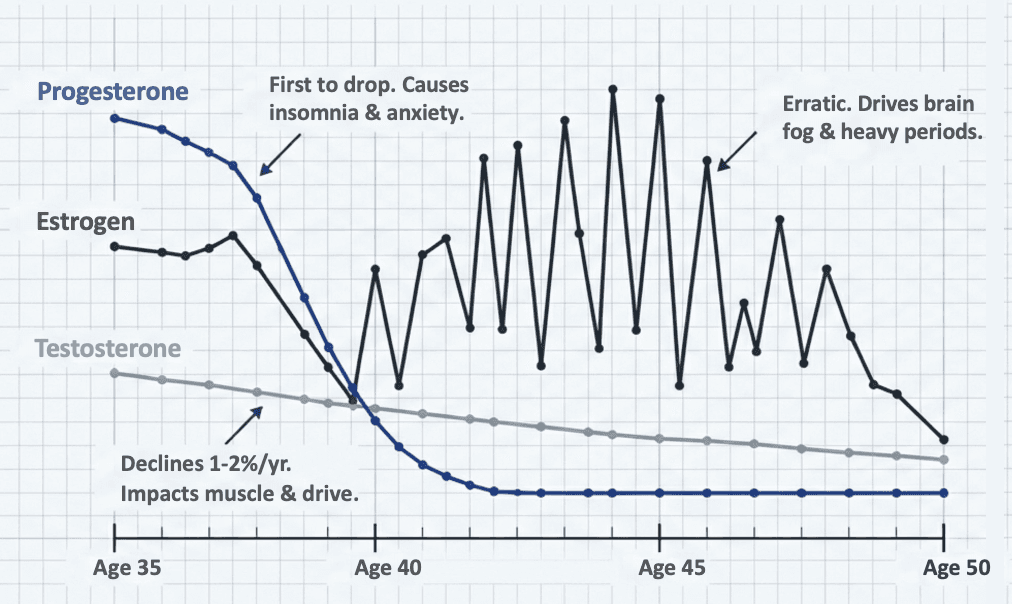
Testosterone naturally declines about 1% per year starting in your 30s, but that rate can accelerate based on:
Stress and sleep disruption
Processed foods and nutrient deficiencies
Environmental toxins (plastics, xenoestrogens)
Sedentary lifestyles and weight gain
By 40, many men have testosterone levels that are technically in range but functionally suboptimal.
The result: More difficulty with energy, libido, and strength in the gym.
Symptoms of Suboptimal Hormones in Your 40s
You don’t need to have all of these, but if more than a few feel familiar, it’s worth testing:
Fatigue that doesn’t resolve with rest
Decline in muscle mass or strength
Increased body fat, especially abdominal
Lower libido or weaker erections
Mood swings, irritability, or apathy
Brain fog or slower cognition
Decreased motivation or drive
Poor sleep quality or reduced recovery
Even “normal” labs may not capture the full picture. What matters is optimal function, not statistical averages.
The Hormones That Matter
A comprehensive evaluation goes beyond just testosterone. Here’s what to include:
Testosterone:
Total T shows how much testosterone is circulating
Free T shows what’s actually bioavailable
Both matter, and both can be impacted by SHBG (sex hormone binding globulin)
Estradiol:
Converted from testosterone via aromatase
Important for libido, joint health, and brain function
Too high or too low can cause issues
DHEA:
A precursor hormone made in the adrenal glands
Supports testosterone, immune function, and mood
Thyroid (TSH, Free T3, Free T4):
Regulates metabolism, energy, and mood
Often overlooked, especially if only TSH is tested
LH and FSH:
Control testosterone production in the testes
Help differentiate between primary and secondary hypogonadism
What Testing Should Look Like
At Catalyst Precision Health, we go beyond the standard panel.
We test:
Total + Free Testosterone
SHBG
Estradiol
DHEA-S
LH & FSH
Full thyroid panel
Insulin resistance markers (fasting insulin, glucose, HbA1c)
Inflammation markers (hs-CRP, homocysteine)
Lipids and cardiovascular risk (ApoB, Lp(a))
We don’t guess. We test. Then we optimize.
What Optimization Actually Looks Like
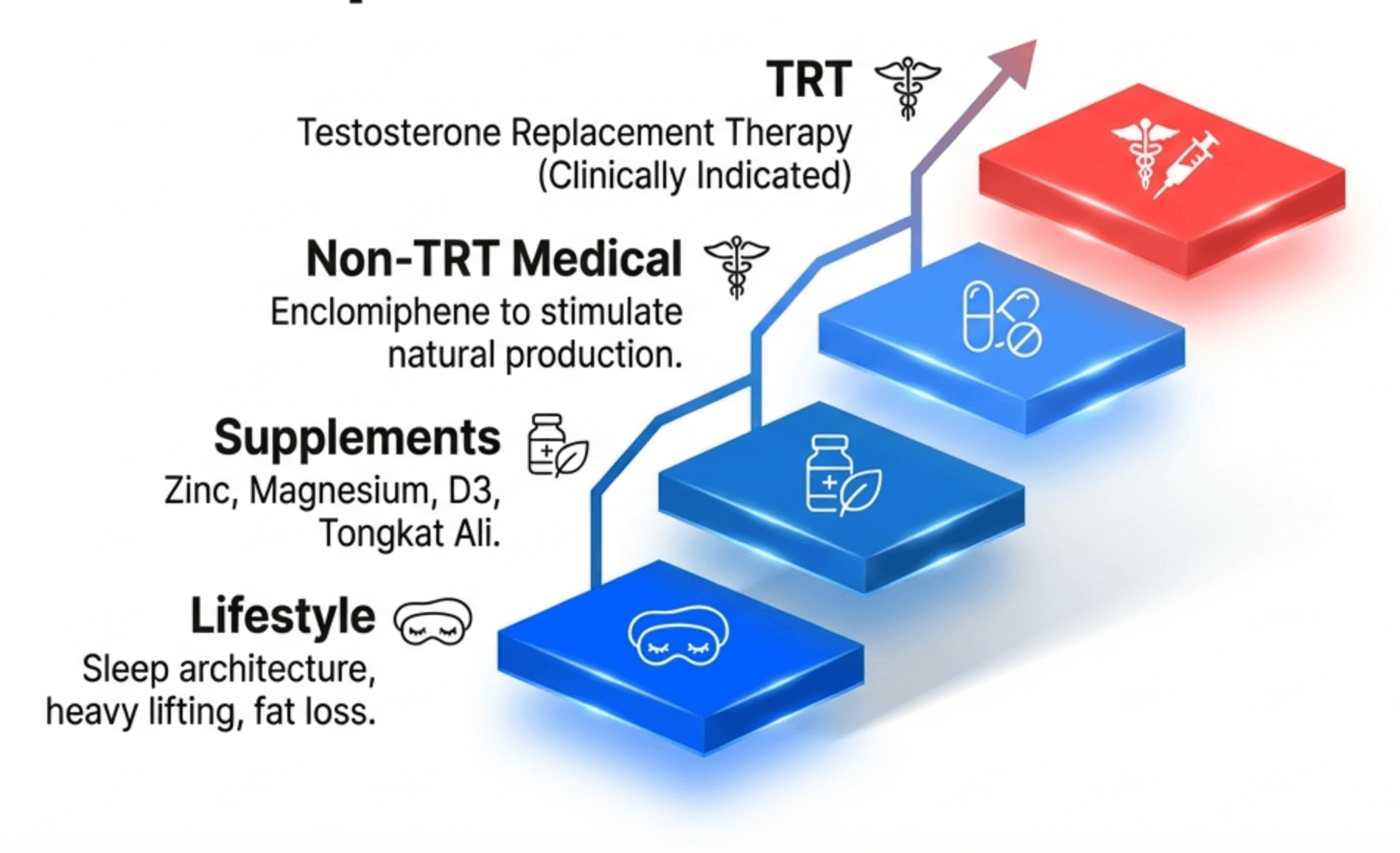
We don’t jump straight to TRT (testosterone replacement therapy). For many men, there are other ways to restore healthy hormone levels.
Step 1: Lifestyle Optimization
The basics matter more than ever:
Sleep: Deep and REM sleep drive testosterone production
Strength Training: Heavy resistance work boosts natural T
Body Composition: Reducing fat lowers estrogen conversion
Stress Management: Chronically high cortisol lowers T
Nutrition: Micronutrients like zinc, magnesium, boron, and vitamin D are essential
We help you build a sustainable strategy, not just quick fixes.
Step 2: Targeted Supplementation
Certain supplements can support your natural production:
Tongkat ali
Fadogia agrestis
Ashwagandha
DHEA (when appropriate)
Creatine
Omega-3s
High-quality multivitamins with bioavailable forms
Step 3: Non-TRT Medical Support
For men with secondary hypogonadism or borderline levels:
Clomid (Clomiphene citrate) can stimulate your own production
Enclomiphene is a newer, more selective version with fewer estrogenic effects
HCG may help preserve fertility and testicular size if on TRT
These options offer hormonal support without committing to long-term TRT.
Step 4: TRT (When Truly Indicated)
If all else fails, and you meet the clinical criteria, TRT can be life-changing.
But it must be:
Clinically supervised with regular labs
Titrated carefully to avoid supraphysiologic dosing
Balanced with estrogen and DHT management
Monitored for fertility and long-term health
We take this seriously. And we’re honest if it’s not yet time.
Optimizing Is About Quality, Not Just Quantity
Your 40s should be your peak - not your slow fade. Optimizing may lead to:
More energy and better workouts
Sharper thinking and stable mood
Better sex and deeper sleep
Longer healthspan and reduced disease risk
You don’t need to settle for decline.
At Catalyst, we blend advanced diagnostics with real-world results to help you optimize for the long haul.
Book a free consultation to see if hormone optimization is right for you.