If you’ve ever felt mentally “off” - forgetting words, struggling to focus, or zoning out in the middle of a conversation - you’re not alone. Brain fog is one of the most common complaints we hear, especially from high-functioning people who feel like they’ve lost their edge.
What most people don’t realize? Hormones play a huge role.
What Is Brain Fog, Really?
It’s not a medical diagnosis, but it’s very real. People describe brain fog as:
Trouble concentrating or staying present
Forgetfulness or slower recall
Mental fatigue or sluggish thinking
Lack of creativity or sharpness
Low motivation or drive
These symptoms often fluctuate and are easy to dismiss, until they start impacting performance, relationships, or quality of life.
The Hormones That Affect Cognitive Clarity
Several key hormones influence brain function, directly or indirectly. Here are the ones we look at first:
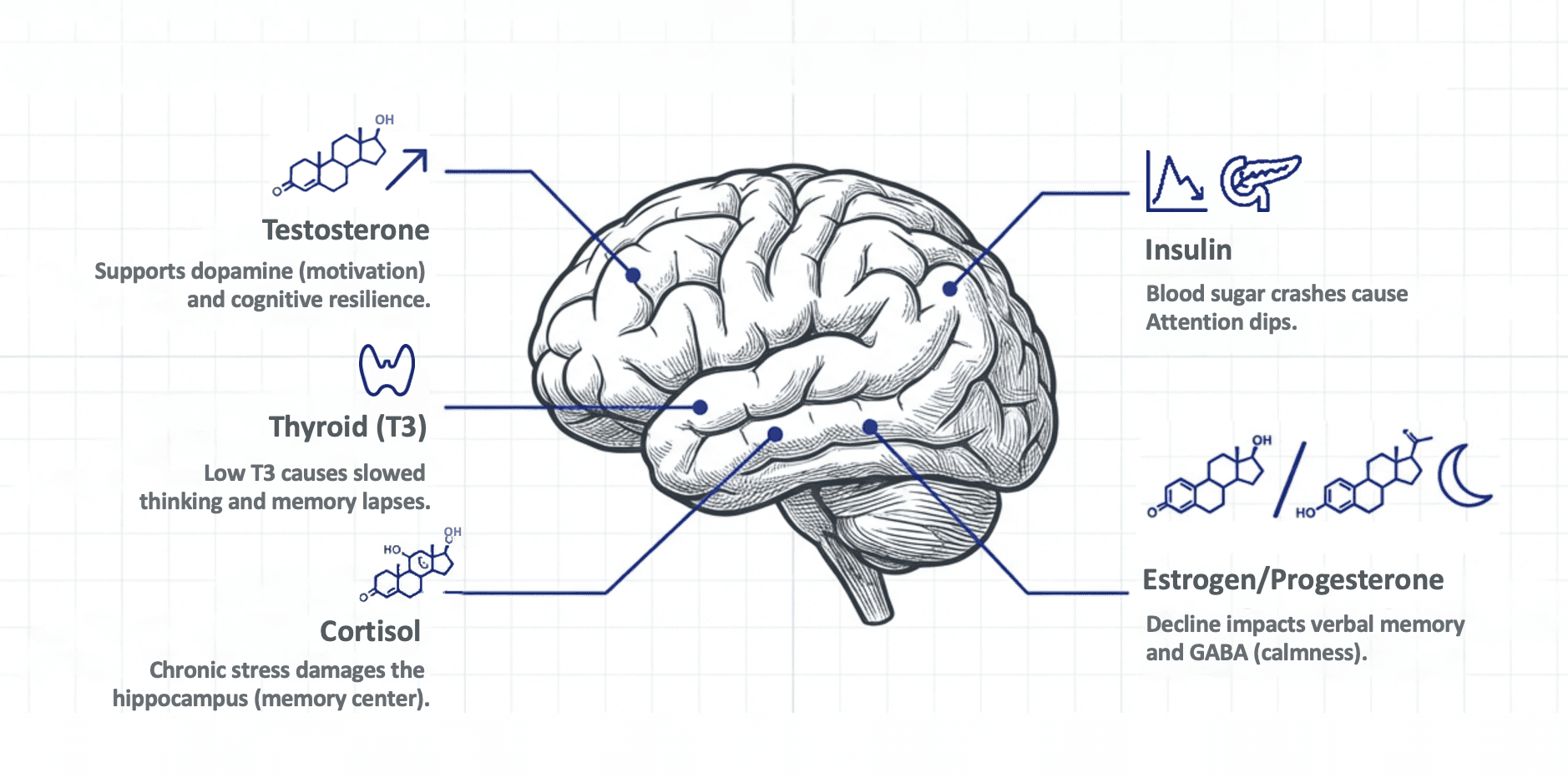
1. Testosterone
Supports dopamine production, motivation, and cognitive resilience
Low T often presents as mental fatigue or “blunted” emotional range
2. Thyroid Hormones (Free T3, Free T4, TSH)
Drive cellular energy and metabolism, including brain cells
Low thyroid = slowed thinking, memory lapses, and low mood
3. Cortisol
Chronic stress raises cortisol, which disrupts hippocampus function (your memory center)
High or dysregulated cortisol flattens energy and focus
4. Insulin
Poor blood sugar regulation causes brain energy crashes and attention dips
Brain fog is often worse after meals or mid-afternoon
5. Estrogen (in men and women)
In men, very low estrogen can impact mood and verbal memory
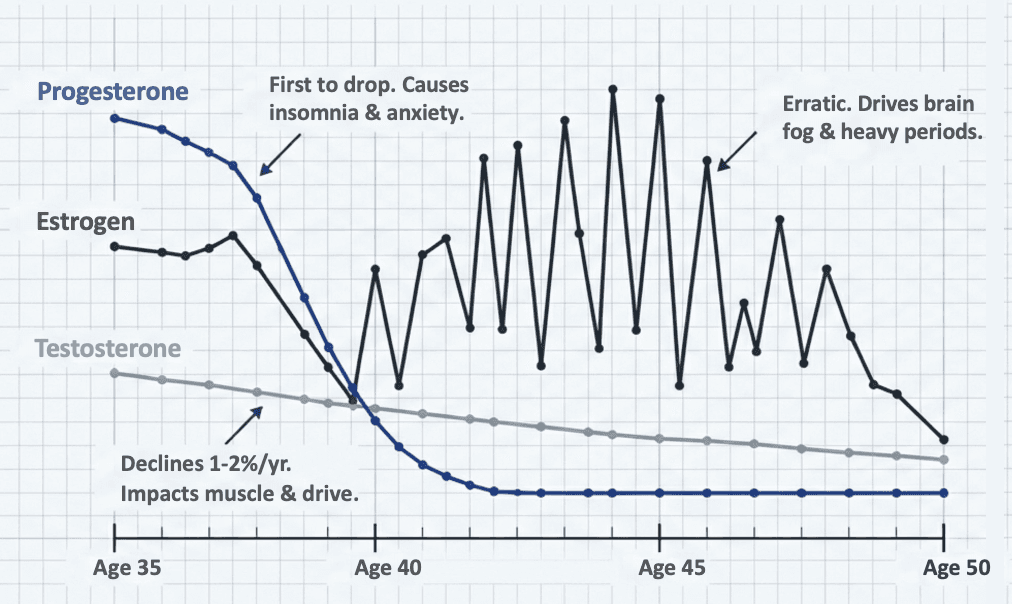
In women, estrogen decline during perimenopause can sharply reduce mental clarity
6. Progesterone (primarily in women)
Calms the brain via GABA receptors. When low, people report racing thoughts and poor sleep.
It’s Not Just the Hormones Themselves
Even “normal” hormone levels can be misleading. We often find that brain fog stems from hormone signaling problems, not just deficiencies:
High SHBG can block free testosterone
Thyroid conversion issues (T4 to T3) cause sluggishness despite normal labs
Adrenal burnout flattens cortisol rhythm, leading to low morning energy and brain fog
Inflammation and poor detox interfere with hormonal receptors
What We Test at Catalyst
If you come to us with brain fog, we don’t guess. We test:
Full thyroid panel (Free T3, Free T4, TSH, reverse T3)
Testosterone (total and free), SHBG, estradiol
Fasting insulin, glucose, and HOMA-IR
AM and PM cortisol
4-point Salivary Cortisol testing
High-sensitivity CRP (inflammation)
Homocysteine and B12 (methylation and cognition)
Sleep quality and circadian rhythm markers
Optional neurocognitive testing or MRI, if indicated
We also look at lifestyle factors like alcohol, overtraining, undereating, stimulant use, and sleep debt - all of which can suppress hormones and impair cognition.
Can It Be Fixed?
Yes, but the fix depends on the cause.
For some, it’s correcting a hormone imbalance. For others, it’s reducing stress load, rebalancing blood sugar, or improving sleep architecture. Often it’s a mix.
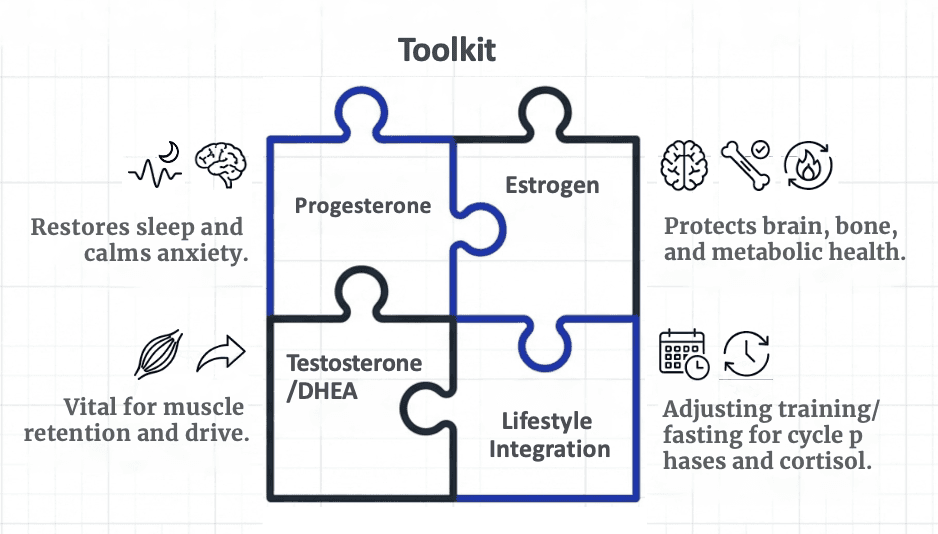
Common interventions include:
Thyroid or testosterone support
Stress recovery protocols and circadian resets
Methylation and B-vitamin optimization
Cognitive nootropics or adaptogens
Sleep and recovery-focused lifestyle shifts
The result: most clients start to feel sharper, more focused, and like themselves again, often within weeks.
Bottom Line
If your mind feels clouded, hormones may be the missing link. Brain fog isn’t just about aging or overwork, it’s your biology asking for help.
At Catalyst, we go upstream. We don’t just chase symptoms. We identify the real drivers - so you can think clearly, perform fully, and get your edge back.