Fatigue is one of the most common complaints in medicine, and also one of the most frustrating. If you’ve been told your labs are “normal” but you still feel exhausted, it’s probably not in your head. You may just need a more advanced lens.
Here’s how functional and precision medicine approaches chronic fatigue, and what we look for first.
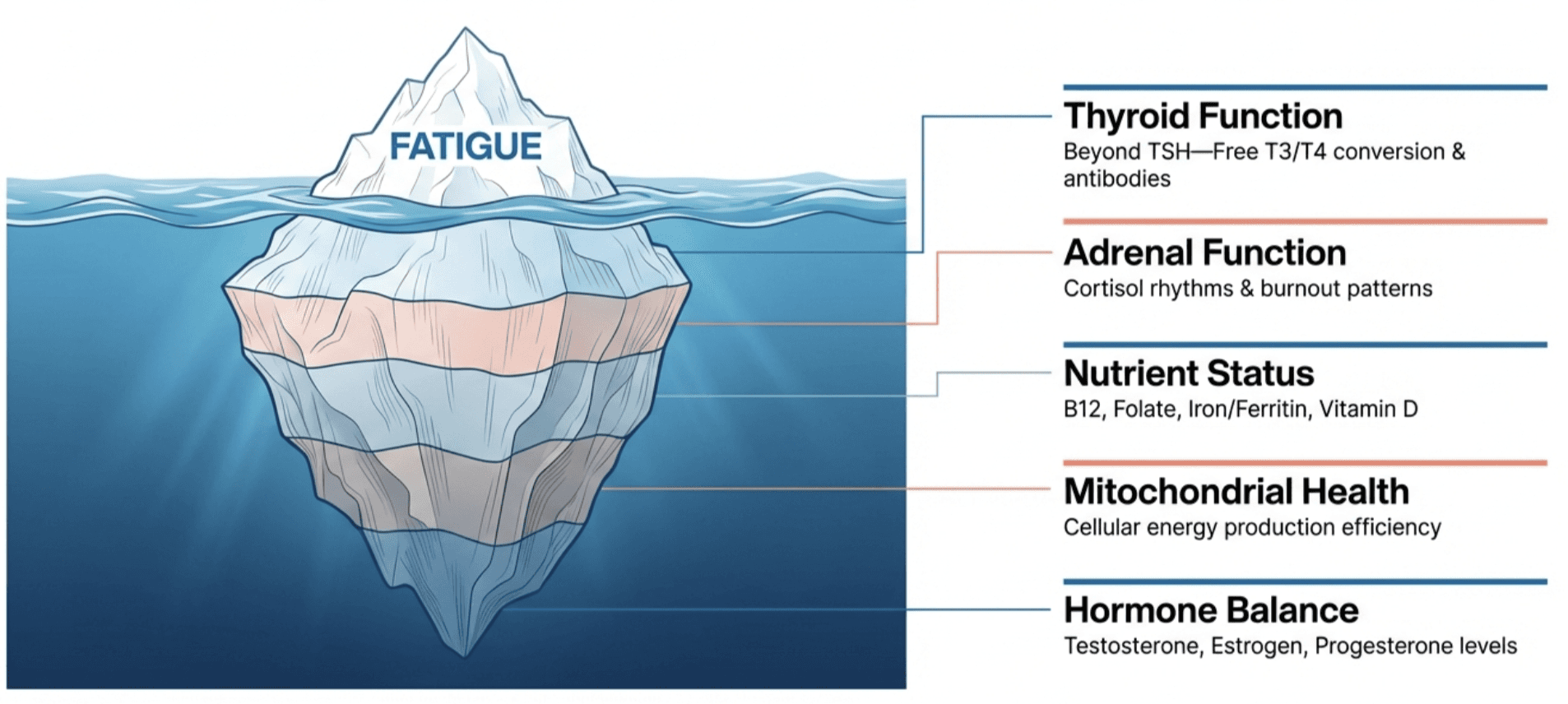
1. Thyroid Function (Beyond Just TSH)
Most conventional doctors only check TSH (thyroid stimulating hormone). But at Catalyst, we run a full thyroid panel that includes:
Free T3 & Free T4: your actual circulating thyroid hormones
Reverse T3: a blocker that competes with active thyroid hormone
Thyroid antibodies: to rule out autoimmune drivers like Hashimoto’s
Why it matters: Subclinical hypothyroidism, sluggish conversion, or autoimmune thyroiditis can all tank energy, even with a normal TSH.
2. Adrenal Function & Cortisol Patterns
Cortisol isn’t just a “stress hormone” - it plays a major role in energy regulation. If your levels are too low in the morning or too high at night, it can lead to:
Brain fog
Midday crashes
Trouble waking up or falling asleep
We often run a 4-point salivary cortisol test to see your daily rhythm, not just a single blood value.
3. Nutrient Deficiencies
Even a “perfect” diet can leave gaps. especially if there are absorption issues or medication interactions. We often test for:
B12 & Folate: essential for mitochondrial energy
Vitamin D: often low, even in active people
These aren’t always covered in routine labs, but low levels are extremely common in tired patients.
4. Mitochondrial Dysfunction
Your mitochondria are the power plants inside your cells. When they’re not working well, your energy production suffers.
At Catalyst, we use indirect clues (like organic acid testing, inflammatory markers, and symptom patterns) to assess mitochondrial efficiency. It’s also one reason some clients respond well to protocols that include:
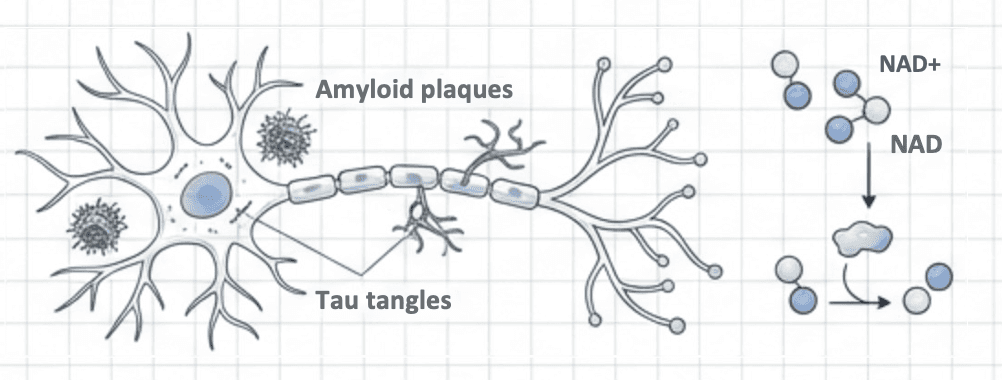
NAD+ precursors
PQQ or CoQ10
Cold exposure and red light therapy
5. Inflammation & Immune Burden
Even mild, chronic inflammation can tax your system. Common sources include:
Gut dysbiosis (SIBO, candida, pathogens)
Uncontrolled blood sugar swings
Unresolved infections (e.g. Epstein-Barr, Lyme, mold exposure)
Autoimmune activity
We look at hsCRP, fasting insulin, immune panels, and sometimes deeper microbiome or stealth pathogen testing depending on the clinical picture.
6. Sleep Quality (Not Just Quantity)
A full 8 hours isn’t helpful if you’re stuck in light sleep all night. We explore:
Sleep architecture (tracked via wearables like Oura or WHOOP)
Sleep apnea risk (especially in high-performing males with large necks or nasal obstruction)
Circadian rhythm alignment
Melatonin production (assessable via urine metabolites)
We may recommend sleep studies, nasal-focused ENT consults, or light exposure timing as part of a protocol.
7. Sex Hormones
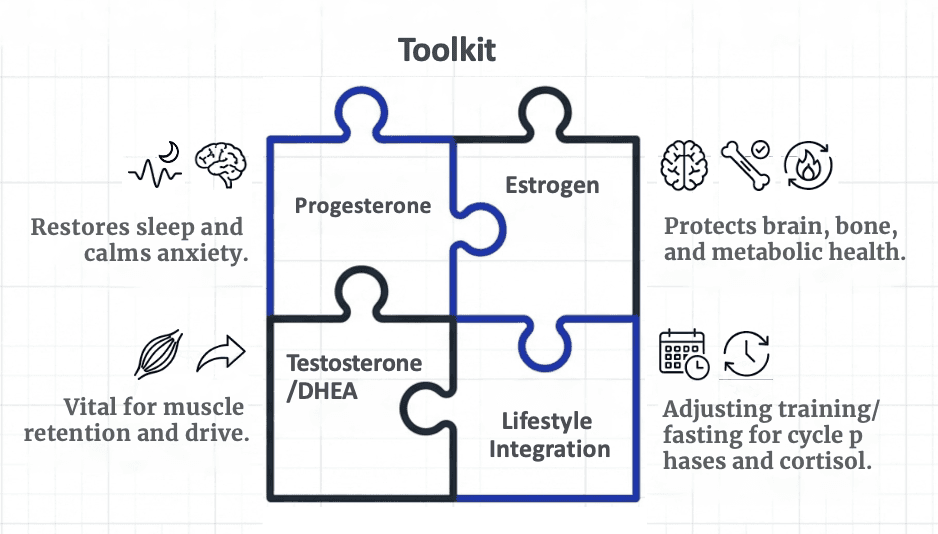
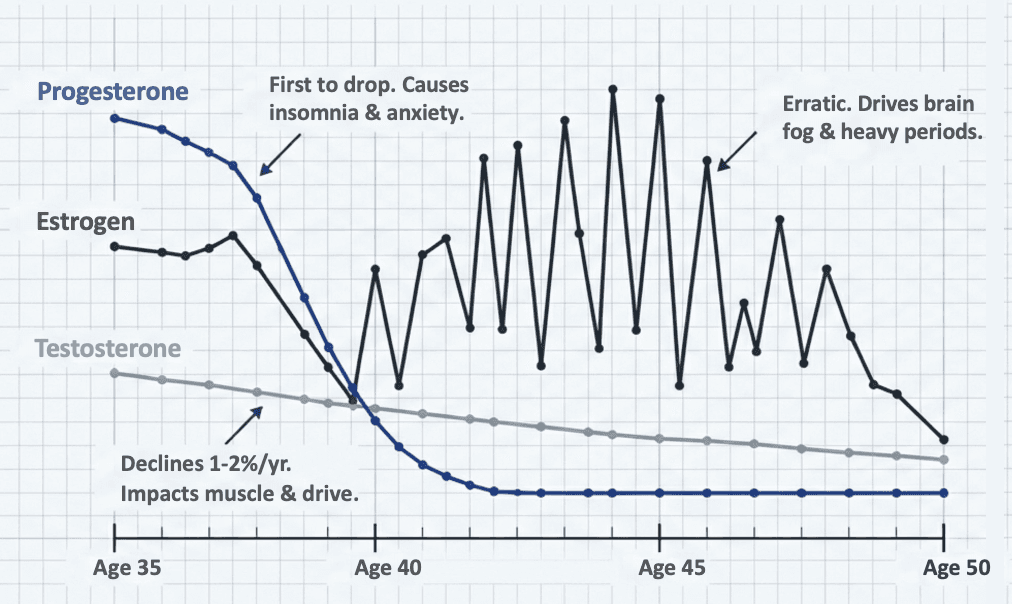
For both men and women, sex hormone imbalances are often overlooked causes of fatigue:
Low testosterone → poor motivation, drive, recovery
Low estrogen → brain fog, poor sleep, joint pain
Progesterone deficiency → poor sleep, anxiety, PMS-related fatigue
We test free and total hormone levels, not just what’s in range - and we interpret those values in the context of your age, symptoms, and goals.
8. Metabolic Flexibility & Glucose Stability
Blood sugar crashes are a hidden cause of afternoon fatigue, irritability, and brain fog.
We use tools like:
Fasting insulin & glucose
Continuous Glucose Monitors (CGMs)
Hemoglobin A1C
Triglyceride-to-HDL ratio
This helps us design food and supplement plans that actually stabilize energy, not just “clean eating” platitudes.
9. Mental Load, Neuroinflammation & Burnout
Sometimes the issue isn’t physical, but the nervous system is stuck in overdrive. Chronic stress, trauma, or burnout can dysregulate energy systems over time.
That’s why we also explore:
HRV (Heart Rate Variability)
Neurotransmitter precursors
Somatic interventions (like breathwork, EMDR, or parasympathetic retraining)
Inflammatory markers linked to mood
Energy is physical and psychological. We treat both.
Bottom Line
If you’re tired all the time, it’s not laziness, aging, or lack of willpower. It’s a signal. At Catalyst, we use advanced testing to understand why. so you can get off the cycle of guesswork and build a protocol that actually works.